video 1
lips bigger, head raised, eyes lowered, hair moved around, neck lowered, eyes enlarged, head smaller
video2
lips redder, nostrils rounder, eyes bigger, eyes lighter, sholders raised, skin lighter, thinner arms, stomach lifted, legs longer, calfs smaller, feet arched, arms longer, head raised, thinner face, thinner neck, thinner legs, lighter skin and hair, butt lowered,
video 3
butt smaller, legs smaller, stomach smaller, arms thinner, thinner all together, more hair, even more hair, even thinner, even thinner, legs thinner, arms smaller, shoulders more relaxed, thinner, more hair, even thinner.
4. It is not ethically okay to change a person's appearance like in these videos. It totally changes the viewer's perception of the photo to know that the model has been changed so much. The manipulation of these photos is crazy gross and since most people will just see the after picture they are being manipulated in to thing the models actually looked like that.
5. In beauty and makeup advertising this would be very unethical because they are manipulating their customers into thinking that the product was what made the model look the was she does when really it was photoshop, fake.
6. changes that don't change the subject or the content or the message of the original photo like lighting or color of the whole photo are okay but when the actual subject gets changed like what happened in the videos it is very un ethical.
7. In fashion photography the photos are trying to show beauty even if they have to manipulate the photos to do so. In photojournalism the photos are trying to tell a story.
8. In fashion photography a lot of the photos are very far from reality making the photos very unethical. In photojournalism most of the photo show reality so the photos are ethical.
9. you are showing us these photos to show what not can do and how some photos are very unethical.
10. None of these photos are of guys because women are a lot more pressured to look like a model.
Friday, November 21, 2014

Wednesday, November 19, 2014


Monday, November 10, 2014
the most powerful image in this photo is this one because it shows that it is hard to be in the army and people do get hurt.
 Set #1 At home in Denver - 1-7
Set #2 At Basic Training - 8-46
Set #3 In Iraq - 51-70
Set #4 Back in Denver - 71-82
the set of images where he was in Iraq was the most powerful because it showed him feeling homesick and actually in the war and being part of the war.
the images tell a story together by showing different events and changes in his life in chronological order.
present tense
the captions enhance the photo by giving a little more information about what is going on in the photo. this gives the viewer a deeper understanding of the photograph or a different view of the photo.
Set #2 At Basic Training - 8-46
Set #3 In Iraq - 51-70
Set #4 Back in Denver - 71-82
the set of images where he was in Iraq was the most powerful because it showed him feeling homesick and actually in the war and being part of the war.
the images tell a story together by showing different events and changes in his life in chronological order.
present tense
the captions enhance the photo by giving a little more information about what is going on in the photo. this gives the viewer a deeper understanding of the photograph or a different view of the photo.
Thursday, November 6, 2014
rules of photography part 2
1. Rule of thirds

2. Balancing Elements

3. Leading Lines

4. Symmetry and Patterns (repetition)

5. Viewpoint

6. Background

7. Create depth

8. Framing

9. Cropping

10. Mergers and avoiding them - here I want you to find me a COOL merger photo.
2. Balancing Elements
3. Leading Lines
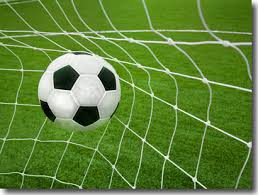
4. Symmetry and Patterns (repetition)
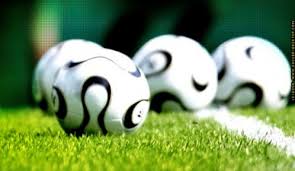
5. Viewpoint

6. Background
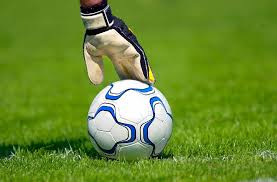
7. Create depth
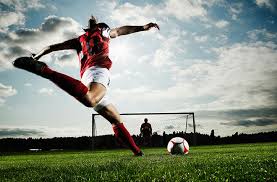
8. Framing

9. Cropping
10. Mergers and avoiding them - here I want you to find me a COOL merger photo.

Wednesday, November 5, 2014
portraits
16. Take Unfocused Shots
As photographers we have ‘sharp focus’ drummed into us as an ultimate objective to achieve in our work – but sometimes lack of focus can create shots with real emotion, mood and interest.
There are two main strategies for taking unfocused images that work:
1. Focus upon one element of the image and leave your main subject blurred. To do this use a large aperture which will create a narrow depth of field and focus upon something in front of or behind your subject.
 Photo by Jeff Kubina
2. Leave the full image out of focus. To do this again choose a wide aperture but focus well in front or behind anything that is in your image (you’ll need to switch to manual focussing to achieve this).
These kinds of shots can be incredibly dreamy and mysterious.
 Portrait by peskymac
20. Find an Interesting Subject
I have a friend who regularly goes out on the streets around Melbourne looking for interesting people to photograph.
When he finds someone that he finds interesting he approaches them, asks if they’d pose for him, he quickly finds a suitable background and then shoots off a handful of shots quickly (if they give him permission of course).
The result is that he has the most wonderful collection of photographs of people of all ages, ethnicities and backgrounds.
While many of us spend most of our time photographing our loved ones – perhaps it’d be an interesting exercise to shoot interesting strangers once in a while?
 Portrait by .mushi_king
A mirror or some other reflective surface offers an even easier way to take a self-portrait. In most cases, the camera will be included in the scene (but this can help make a statement about your enthusiasm for photography). You can use your camera as a prop, and hold it away from your face. When you photograph into a mirror, be sure your reflection is in focus. An infrared autofocusing system will usually focus on glass if it's aimed into a mirror, and will focus at infinity if aimed at an angle. You might try focusing at an object that's the same distance as the distance from the camera to the reflection, lock in the focus, recompose the image to include yourself, and take the picture.


I like these environmental portraits because show the person interacting with their environment. Also they are well photographed and use some of the rules of photography and rules of portraits.
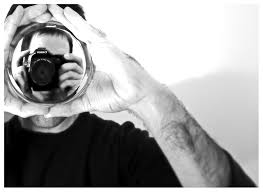

I like these self portraits because thy show the photographer in a weird way through the camera. they both use the rule of thirds and the rule of simplicity.


I like these photos because its just people acting natural and casual. they both use rule of thirds and lines.
my portraits will be of random people using the rules of photography, what i know about iOS, aperture, and shutter speed to get the best quality photo, and rules of portraits.
Subscribe to:
Posts (Atom)